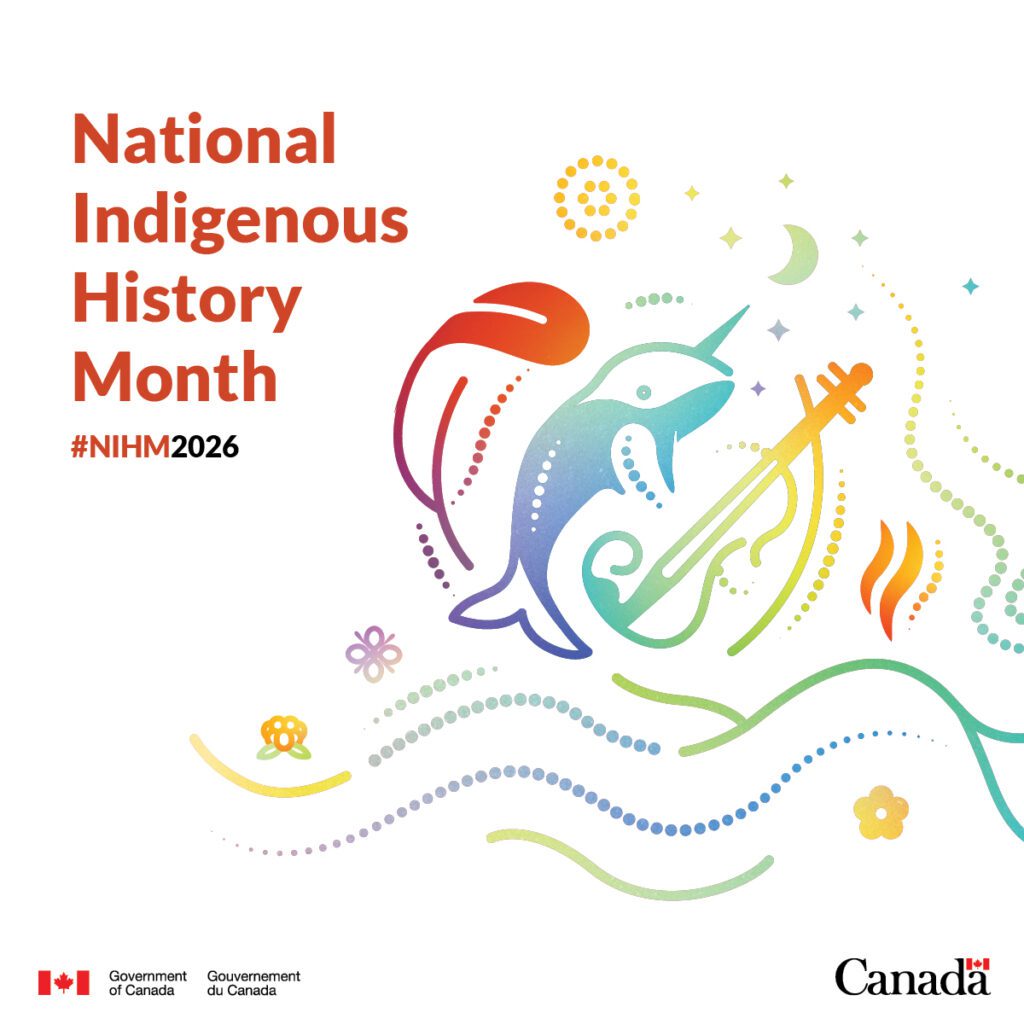
National Indigenous History Month is an opportunity to explore stories, histories, and voices from Indigenous creators across Canada. This year, we’re taking a slightly different route through the collection. Instead of focusing on novels, memoirs, or historical nonfiction, this reading and viewing list highlights contemporary Indigenous storytellers working across poetry, graphic novels, film, and other creative genres. These creators are producing bold, funny, imaginative, lyrical, unsettling, and deeply original work that continues to shape Canada’s cultural landscape in exciting ways.
From graphic novels and visual storytelling to award-winning films and powerful poetry collections, Indigenous storytelling can be found across every corner of the library. Some works explore identity, family, language, and belonging. Others dive into horror, humour, fantasy, romance, futurism, and everyday life. Together, they reflect the incredible range and creativity of Indigenous artists working today.
Whether you’re discovering a new favourite poet, exploring Indigenous cinema, or picking up your first graphic novel in years, this list is an invitation to browse beyond the expected.
Film

Tracey Deer is a Mohawk filmmaker, screenwriter, and director from Kahnawake, Quebec whose work explores identity, community, family, and Indigenous experiences in contemporary Canada. An award-winning creator, Deer is known for documentaries, television, and feature films, including the acclaimed series Mohawk Girls and the coming-of-age drama Beans.
Beans follows a young Mohawk girl navigating adolescence during the 1990 Oka Crisis, a major land dispute between the Mohawk community of Kanesatake and the Canadian government. Inspired by Deer’s own experiences growing up during the crisis, the film explores friendship, racism, resilience, and identity through the eyes of a teenager caught between childhood and a rapidly changing world.

Jeff Barnaby was a Mi’kmaq filmmaker, writer, and director from Listuguj First Nation in Quebec whose work blended horror, social commentary, dark humour, and Indigenous storytelling in bold and unforgettable ways. Known for his striking visual style and genre-defying films, Barnaby became one of the most influential contemporary Indigenous filmmakers in Canada.
Blood Quantum is a zombie horror film set on a Mi’kmaq reserve where Indigenous residents are mysteriously immune to a viral outbreak turning others into the undead. Mixing gore, suspense, and sharp social commentary, the film explores survival, colonialism, community, and belonging while reimagining the zombie genre through an Indigenous lens.

Bretten Hannam is a Mi’kmaq filmmaker and writer from Nova Scotia whose work explores identity, belonging, family, and Two-Spirit experiences through contemporary Indigenous storytelling. Known for visually rich and emotionally grounded films, Hannam brings together road movie storytelling, queer coming-of-age themes, and Indigenous perspectives in powerful and deeply personal ways.
Wildhood follows a Two-Spirit Mi’kmaq teenager who leaves home in search of his estranged mother and a stronger connection to his identity and community. Set against the landscapes of Atlantic Canada, the film explores self-discovery, friendship, love, and resilience while celebrating Indigenous culture, language, and belonging.

Danis Goulet is a Cree and Métis filmmaker and writer from Saskatchewan whose work blends Indigenous storytelling with science fiction, drama, and speculative fiction. Known for her atmospheric visual style and powerful social themes, Goulet creates films that explore survival, resistance, identity, and the lasting impacts of colonialism.
Night Raiders is a dystopian science fiction thriller set in a near-future North America where children are taken from their families by a militarized state. Inspired in part by the history of residential schools, the film follows a Cree mother and daughter as they flee capture and join an underground resistance movement fighting for freedom and survival.
Poetry

Billy-Ray Belcourt is a Cree poet, writer, and scholar from the Driftpile Cree Nation in Alberta whose work explores love, grief, identity, queerness, Indigenous life, and the emotional realities of contemporary Canada. Known for lyrical and deeply reflective writing, Belcourt has become one of the country’s most celebrated contemporary Indigenous literary voices.
The Idea of an Entire Life is a poetry collection that weaves together intimacy, memory, longing, and everyday experience through vivid and emotionally layered language. Moving between tenderness and heartbreak, the collection reflects on relationships, loneliness, joy, and what it means to imagine a full and meaningful life within systems shaped by colonialism and loss.

jaye simpson is an Oji-Cree Saulteaux writer, poet, and performer from the Sapotaweyak Cree Nation whose work explores queerness, Indigeneity, grief, joy, and community. Through vivid, emotionally charged poetry, simpson writes about survival, love, healing, and the complexities of navigating contemporary life as a queer Indigenous person in Canada.
A Body More Tolerable is a poetry collection that examines trauma, intimacy, desire, identity, and resilience through raw and deeply personal writing. Blending vulnerability with sharp insight, the collection reflects on relationships, mental health, family, and the ongoing process of learning how to live within and care for one’s body.

Jordan Abel is a Nisga’a writer, poet, and scholar from British Columbia whose work explores identity, memory, language, and the ongoing impacts of colonialism through experimental and innovative forms of writing. Known for blending poetry, visual structure, and archival material, Abel’s work challenges readers to think differently about storytelling, history, and representation.
Nishga is a poetry collection that reflects on Indigenous identity, family history, and belonging through fragmented language, repetition, and visual experimentation. Drawing from personal memory and colonial archives, the collection explores the complexities of growing up disconnected from community while searching for connection, understanding, and self-definition.

Louise Bernice Halfe, also known as Sky Dancer, is a Cree poet from Saddle Lake Cree Nation in Alberta whose work explores memory, language, family, spirituality, and the enduring impacts of colonialism. Widely recognized as one of Canada’s leading Indigenous poets, Halfe’s writing blends storytelling, Cree knowledge, humour, and lyricism in deeply powerful ways.
Burning in This Midnight Dream is a poetry collection that reflects on intergenerational trauma, resilience, motherhood, identity, and healing through vivid and emotionally layered language. Moving between personal experience and collective history, the collection confronts painful legacies while also making space for survival, connection, and renewal.
Graphic Novels

David A. Robertson is a Cree writer, graphic novelist, and educator from Winnipeg whose work spans children’s literature, memoir, graphic novels, and nonfiction. A member of Norway House Cree Nation, Robertson is known for creating accessible and emotionally powerful stories that explore Indigenous history, identity, resilience, and community for readers of all ages.
Sugar Falls: A Residential School Story is a graphic novel that tells the story of a Cree woman reflecting on her experiences in Canada’s residential school system. Based on the true story of Elder Betty Ross, the book explores loss, survival, friendship, and healing while presenting difficult history in a thoughtful and approachable format for younger and adult readers alike.


Call us at 1-844-649-8127 or email help@orl.bc.ca. Please include as many details as you can about your question, account, or device. This helps us support you more quickly and accurately.
Library card expired? Reach out to your local branch or contact us online to renew—it’s quick and easy.