Take the first step in controlling indoor air pollution by borrowing the Indoor Air Quality Monitor Kit from the Okanagan Regional Library. Knowing indoor air quality levels can help you take steps to improve ventilation or remove pollutants.
This lending program was made possible through a partnership with the City of Kelowna and Interior Health.
Please note: These devices are not carbon monoxide detectors or life safety devices.
What’s in the Kit?
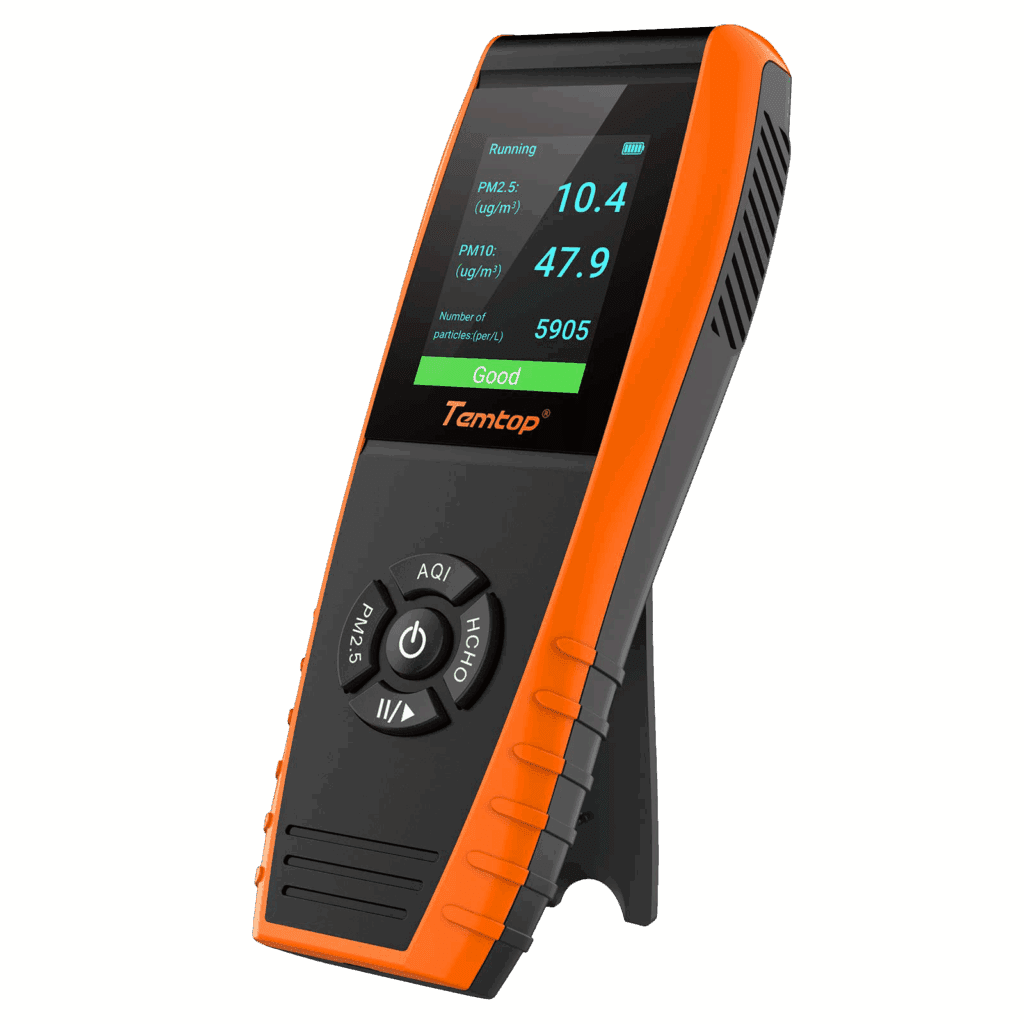
- Temtop LKC-1000 Air Quality Monitor (Model 1000S+ 2nd Edition) Measures indoor air quality indicators in real time.
- Protective case for safe transport and storage.
- USB to Micro Charging Cable
- USB Dual-Port Wall Charger
Getting Started
This handheld monitor will help you assess the PM2.5 concentration of your indoor environment (home, workplace, or school, etc.). Use this monitor with caution.
1. Familiarize yourself with the monitor by reading the User Manual.
2. Press and hold the power button for two seconds to turn on/off the monitor. If the battery level is low as indicated in the top right corner of the display, charge the monitor by plugging it into a double USB port using the charging cable provided.
3. Click the PM2.5 button.
4. Leave the monitor running and in place for several hours to ensure an accurate reading.
Note: the monitor also has buttons for the Air Quality Index (AQI) and formaldehyde (HCHCO). This program does not address those indicators, however more information on AQI and HCHO can be found in the User Manual.
Things to Try at Home
• Test PM2.5 levels in different rooms.
• Turn on a fan for a few hours and see how the reading changes.
• Have the monitor on in the kitchen while you cook and see how that changes the PM2.5 levels. See the difference it makes using the fan vent on top of your stove.
• Compare to the outdoor air quality.
Why Air Quality Is Important
Air quality is determined by the level of pollutants in the air. The Okanagan generally has good air quality, however smoke from residential wood burning, open burning, wildfires, vehicle exhaust and dust contribute to air pollution. Air quality can vary greatly by location, from hour to hour, from outside to inside of buildings, and even between indoor buildings.
Sources of pollution
Particulate matter is the air pollutant of greatest concern to the health of the BC Population.In general, the smaller particles such as PM2.5 tend to be more harmful than larger particles like PM10.
More information on particulate matter is available at HealthLink BC.
Health Effects
People respond differently to varying levels of air quality, and some are at higher risk of experiencing negative health effects. Those at greater risk include:
• People with chronic lung/heart disease
• Unborn babies
• Children
• Older adults
Short term exposure to PM2.5 can irritate the eyes, nose, throat and lungs. It may also cause symptoms such as wheezing, coughing and shortness of breath. PM2.5 has been shown to cause medical conditions such as asthma, chronic obstructive pulmonary disease and heart disease. High levels of PM2.5 has been linked with increases in medical visits, hospital admissions and premature death.
Indoor Air Quality
Air pollutants can move inside from outdoors or originate from indoor sources, impacting indoor air quality. The BC Lung Foundation’s Healthy Indoor Environments Program notes that Canadians spend 90% of their day indoors. The air we breathe indoors can contain pollutants such as particulates, gases (like radon), allergens and fumes that can significantly impact our health in both the short and long term. Health Canada recommends that indoor levels of PM2.5 should be kept as low as possible, as there is no apparent threshold that is fully protective against the health effects of PM2.5.
Guidance for Cleaner Air Spaces during Wildfire Smoke Events
BC Lung Foundation: Healthy Indoor Environments Program
Understanding Air Quality and What it Means to Your Health
The Air Quality Health Index (AQHI) is used in Canada to explain what local air quality means to your health. When the AQHI index reaches 7 (high health risk), it is often because of high concentrations of smoke particles (PM2.5) in the community. In general, indoor PM2.5 levels are lower than those seen outdoors, however during smoke events, indoor PM2.5 levels can reach levels high enough to be of significant health concern.
To stay updated on AQHI levels in your community, subscribe to get text or email alerts for Smoky Skies Bulletins and Air Quality Advisories.
Tips to Improve your Indoor Air Quality
1. Control the source
• Remove the source of pollution or reduce the level of emissions. Possible sources include biological contaminants (e.g., dust, pollen, mold), combustion by-products (e.g., smoke, vehicle exhaust, carbon monoxide, radon), and volatile organic compounds (VOCs) (e.g., off-gas from new furnishings and carpet, paint, household cleaners).
• Exchange old wood appliances with cleaner models (e.g., electric or EPA emission-certified wood appliances). For rebates and eligibility visit the RDCO.
• Keep doors, windows, and fireplace dampers shut.
• Avoid smoking cigarettes, burning candles or incense, using wood stoves, and vacuuming during smoky periods. Each of these may cause unhealthy particulates to circulate in your indoor air.
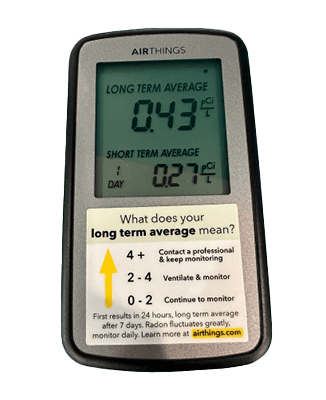
Note: the TemTop monitors offered in this program do not measure radon gas. The Okanagan Regional Library offers Digital Radon Detector Kits for loan. This tool will provide a snapshot of radon levels. For a more comprehensive assessment follow-up with a 90-day test kit.
2. Improve ventilation and building airtightness
• On days when outdoor air quality is very poor such as during wildfire/smoke events, consider limiting airflow from the outdoors for a short period of time.
• Leaky windows, walls, ductwork, doors, louvers, and roofs not only allow heat to escape and cold or smoke to come in, they can also allow condensation to form, which can lead to mould growth. Check the weep holes, cracked caulking, and fix windows seals and frames. Ventilation is key to ensuring the air within your home is healthy and safe. Take a tour to see how to improve indoor air.
3. Clean the air
• Purchase or build an air filter.
• Choose a high-efficiency particulate air (HEPA) filter to help remove fine particles from indoor air.
• Make a low-cost air cleaner. The Pacific Institute on Pathogens, Pandemics and Society (PIPPS) and the BC Lung Foundation offer a step-by-step guide for building a unit for under $100. See “Air Purifiers” in the Resources section for the link.
• Ensure your heating, ventilation, and air-conditioning (HVAC) system uses proper filtration.
• Install filters with the highest minimum efficiency reporting value (MERV) rating your system allows. A MERV rating of 13 or higher is recommended for removing fine particulate matter.
• Check your owner’s manual or consult an HVAC technician to confirm the best MERV rating for your home and system.
• Keep replacement filters on hand. During prolonged smoke events, filter efficiency can decrease. Most filters should be replaced two to four times per year, while higher-efficiency filters are typically replaced once annually.
• During wildfire or smoke events, set air conditioners to recirculation mode to prevent outdoor air from entering your home.
Resources
Air Purifiers
• Low-cost “DIY” Air Cleaners
• Portable Air Cleaners
Air Quality Information and Programs
• Interior Health Air Quality Information
• Healthy Indoor Environments Program
• Air Quality Health Index (AQHI)
• Regional District of Central Okanagan Air Quality
• Information on Particulate Matter and Outdoor Air Pollution
• Community Wood Smoke Reduction Program
Incentives and Rebates to Improve Your Home
• CleanBC Rebates
• Natural Resources Canada Energy Efficiency for Homes
• FortisBC Rebates
Purchasing Air Quality Monitors
• United States Environmental Protection Agency Air Sensor Toolbox
• Temtop (for reference)
• PurpleAir (for reference)
Ventilation and Airtightness
• Air Sealing Your Home
• Information on Mould and Other Biological Contaminants
• Guide to Addressing Moisture and Mould Indoors
Wildfire and Smoke Information
• BC Centre for Disease Control (BCCDC) Wildfire Smoke
• Information on PM2.5 and Wildfires
• Information on PM2.5 and Air Quality Levels
• Information on Extreme Heat
• Creating Cleaner Indoor Air During Wildfire

Did you make something awesome using this kit?
Share your creation/photo with us on social media. Remember to use #ORLMakes so everyone can appreciate, learn, and marvel at your invention.

Tell us what you thought!
We want to know all about your experience using this Library of Things kit at home. Please take a few minutes to fill out this short survey.
Lending Policy
- This kit can be borrowed for 28 days.
- 1 renewal if no one else is waiting for the item.
- The borrower is responsible for lost, missing, and damaged pieces (see content list with prices included with kit).
- Before returning, please ensure all items are clean and in good condition.
- Return the kit to a staff member at the front desk of your nearest ORL location. Do not use the book drop or leave them outside the library.
- BC One Card patrons: Library of Things kits must be checked out and returned to one of the Okanagan Regional Library branches.