Learn more about the air inside your home with an Air Quality Monitor from the Okanagan Regional Library’s Library of Things.
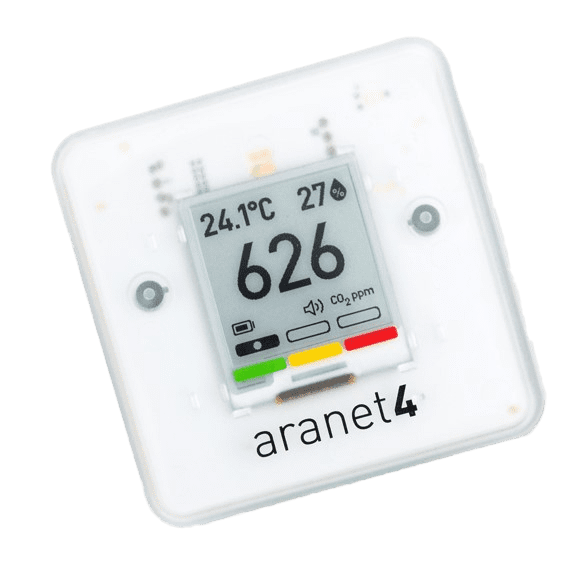
Air Quality Monitors measure fine particulate matter (PM2.5) in the air. Use one to compare rooms, investigate how cooking affects your air, test the difference an exhaust fan or air cleaner makes, or monitor indoor conditions during wildfire smoke. Knowing your indoor PM2.5 levels can help you identify sources of pollution and take steps to improve your indoor air quality.
What’s in the Kit
The ORL offers two models of Air Quality Monitor. The features and measurements available vary by model.
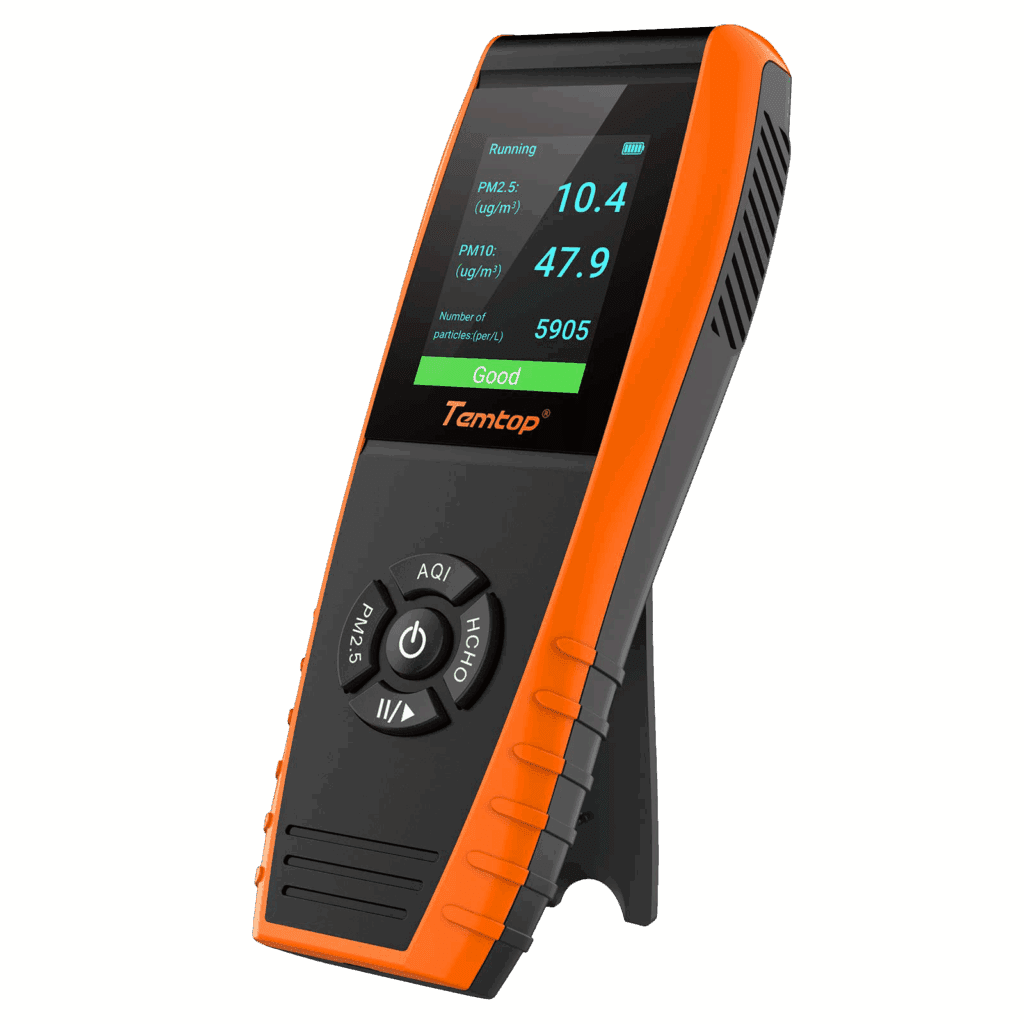
Temtop LKC-1000S+ 2nd Edition
Measures PM2.5 and other indoor air-quality indicators in real time.
Kit includes:
- Temtop LKC-1000S+ 2nd Edition Air Quality Monitor
- USB Charging Cable
- USB Dual-Port Wall Charger
- Protective Case
- User Manual
Temtop M10+
Measures PM2.5 and other indoor air-quality indicators in real time.
Kit includes:
- Temtop M10+ Air Quality Monitor
- USB charging cable
- User Manual
This monitor was provided to the Okanagan Regional Library by BC Lung Foundation through a generous grant from the Community Foundation of North Okanagan.


Borrowing Information
Loan period: 28 days
Place a hold through the ORL catalogue to have an Air Quality Monitor sent to your preferred ORL branch.
Getting Started
Your Air Quality Monitor measures the concentration of PM2.5 in the air around you. PM2.5 is measured in micrograms per cubic metre (µg/m³). Readings can change quickly depending on activities inside your home and outdoor conditions, so a single reading does not tell the whole story.
Temtop LKC-1000S+ 2nd Edition
- Read the User Manual and familiarize yourself with the monitor.
- Press and hold the power button for two seconds to turn the monitor on or off.
- Select PM2.5.
- Place the monitor in the room or area you want to test.
- Leave it running and in place for several hours for a more representative reading.
Temtop M10+
- Read the User Manual and familiarize yourself with the monitor.
- Charge the monitor using the USB cable provided, if necessary.
- Turn on the monitor.
- Place it in the room or area you want to test.
- Leave it running and in place for several hours for a more representative reading.
- Watch how the PM2.5 level changes over time or under different conditions.
Important
These monitors are not carbon monoxide detectors and are not life-safety devices.
Use the monitor according to the manufacturer’s instructions. The ORL takes no responsibility for the accuracy of results or misuse of the device and does not provide health, safety or medical advice through this lending program. If you are concerned about your readings or their possible effects on your health, contact a health-care professional.
Things to Try at Home
Compare rooms
Test PM2.5 levels in different rooms. Are the readings the same throughout your home?
Try the kitchen
Watch the monitor while you cook. Then turn on the range hood or exhaust fan. What changes?
Test an air cleaner
Take a reading, then run a portable air cleaner with a HEPA filter. Check again after a few hours.
Watch outdoor conditions
Compare indoor readings with outdoor air-quality conditions, particularly during wildfire smoke.
Try one change at a time
Changing one thing at a time makes it easier to see what may be affecting your readings.
What Is PM2.5?
PM2.5 refers to tiny airborne particles measuring 2.5 micrometres or less in diameter. Because these particles are so small, they can be breathed deep into the lungs.
Indoor sources can include:
- cooking
- fireplaces and wood stoves
- candles and incense
- smoking and vaping
Outdoor sources can include:
- wildfire smoke
- vehicle exhaust
- residential and open burning
- industrial pollution
Outdoor PM2.5 can also enter your home through windows, doors and ventilation systems.
Why Does PM2.5 Matter?
Exposure to PM2.5 can irritate the eyes, nose, throat and lungs and may cause symptoms such as coughing, wheezing and shortness of breath.
People respond differently to air pollution. Some people are at greater risk of experiencing health effects, including:
- people with chronic lung or heart disease
- children
- older adults
- pregnant people
Indoor air quality can change throughout the day and can be affected by both activities inside your home and outdoor conditions. Monitoring PM2.5 can help you better understand when and where those changes occur.
Understanding Your Readings
The Government of British Columbia’s provincial air-quality objective for PM2.5 is a 24-hour average of less than 25 µg/m³. Your monitor measures the air immediately around it. Readings may rise and fall quickly depending on what is happening nearby.
For a better picture of your indoor air:
- leave the monitor in one place for several hours
- watch how readings change over time
- compare different rooms
- compare readings before, during and after activities
- compare indoor readings with outdoor air-quality conditions
Check Outdoor Air Quality
The Air Quality Health Index (AQHI) communicates the health risks associated with outdoor air quality.
Improve Your Indoor Air Quality
There are three main ways to improve indoor air quality.
Control the Source
- Run the exhaust fan while cooking.
- Don’t smoke or vape indoors.
- Avoid burning candles or incense when air quality is a concern.
Improve Ventilation
When outdoor air quality is good, ventilation can help remove indoor pollutants.
During wildfire smoke or other periods of poor outdoor air quality, consider limiting outdoor air entering your home for a short period.
Clean the Air
- Use a portable air cleaner with a HEPA filter.
- Clean or replace HVAC filters as recommended.
- During wildfire smoke, use air conditioners on the recirculation setting.
Learn More About the Air You Breathe
What’s Your IAQ IQ?
Learn more about indoor air quality and PM2.5 with What’s Your IAQ IQ?, a short introduction from BC Lung Foundation.
The BREATHE Project
Learn how to make a low-cost DIY air cleaner to help reduce indoor particulate matter.
Wildfire Smoke
Find information about wildfire smoke, its health effects and ways to reduce exposure.
Interior Health
Find more information about air quality and health.
Regional District of Central Okanagan Air Quality
Find local air-quality readings and forecasts.
Resources
Air Quality Information and Programs
• Interior Health Air Quality Information
• Air Quality Health Index (AQHI)
• Regional District of Central Okanagan Air Quality
• Information on Particulate Matter and Outdoor Air Pollution
• Community Wood Smoke Reduction Program
Incentives and Rebates to Improve Your Home
• CleanBC Rebates
• Natural Resources Canada Energy Efficiency for Homes
Wildfire and Smoke Information
• BC Centre for Disease Control (BCCDC) Wildfire Smoke
• Information on PM2.5 and Wildfires
• Information on PM2.5 and Air Quality Levels
• Information on Extreme Heat
• Creating Cleaner Indoor Air During Wildfire
Did you make something awesome using this kit?
Share your creation/photo with us on social media. Remember to use #ORLMakes so everyone can appreciate, learn, and marvel at your invention.

Tell us what you thought!
We want to know all about your experience using this Library of Things kit at home. Please take a few minutes to fill out this short survey.
Lending Policy
- This kit can be borrowed for 28 days.
- 1 renewal if no one else is waiting for the item.
- The borrower is responsible for lost, missing, and damaged pieces (see content list with prices included with kit).
- Before returning, please ensure all items are clean and in good condition.
- Return the kit to a staff member at the front desk of your nearest ORL location. Do not use the book drop or leave them outside the library.
- BC One Card patrons: Library of Things kits must be checked out and returned to one of the Okanagan Regional Library branches.